
Built-in AI in WordPress 7.0: Features That Could Transform Modern Publishing
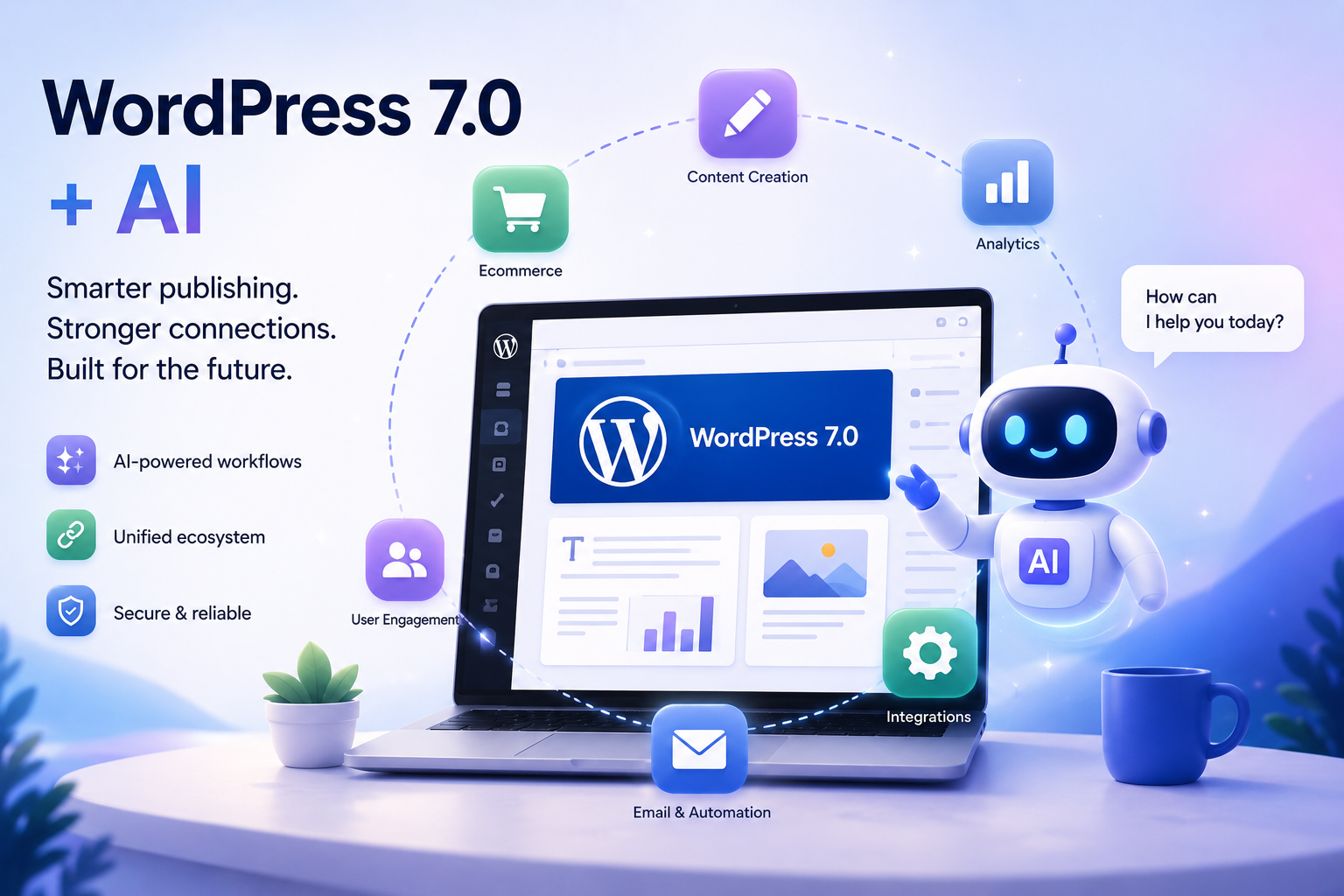
Artificial intelligence is rapidly reshaping how websites are created, managed, optimized, and published. From content generation and workflow automation to smarter integrations and data-driven experiences, AI is becoming deeply connected to modern web development.
With WordPress 7.0, the platform moves further toward supporting AI-powered publishing workflows through improved infrastructure, interoperability systems, and a more connected ecosystem architecture.
Rather than replacing creators, developers, or agencies, WordPress 7.0 focuses on creating a smarter and more scalable foundation for intelligent publishing experiences.
This release represents an important shift in how WordPress is preparing for the future of web creation — one where websites, automation systems, ecommerce platforms, and AI-powered tools work together more intelligently than ever before.
WordPress 7.0 Takes a Smarter Approach to AI
Instead of forcing fully automated website generation into the platform, WordPress 7.0 focuses on strengthening the systems that make AI integrations more effective, scalable, and reliable.
This creates opportunities for:
Smarter publishing workflows
Better automation systems
Improved plugin interoperability
More intelligent content management
Faster workflow coordination
Cleaner integrations across platforms
As websites become increasingly connected to automation tools, ecommerce systems, customer engagement platforms, and AI assistants, infrastructure consistency becomes more important than ever.
WordPress is taking a long-term ecosystem approach rather than focusing only on short-term AI trends. That decision may ultimately prove more valuable for developers, agencies, and businesses managing complex publishing environments.
Why AI Infrastructure Matters
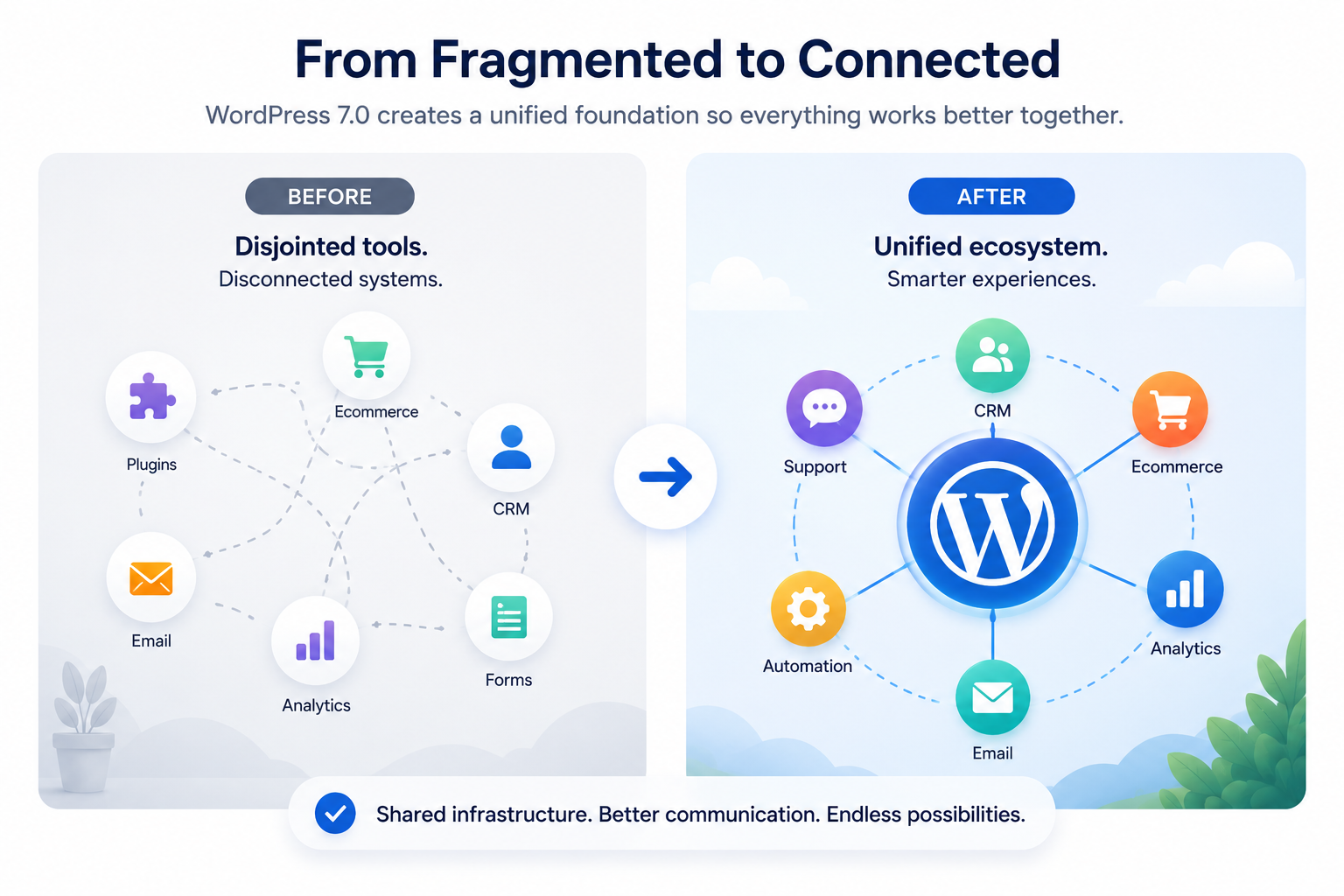
Modern WordPress websites rely on multiple plugins, services, APIs, and external platforms working together simultaneously.
Without shared standards, AI systems often struggle to understand:
Website capabilities
Available workflows
Plugin structures
Permission systems
Content relationships
Data organization
This fragmentation creates major challenges for automation systems and connected workflows.
WordPress 7.0 introduces improvements designed to support more structured and machine-readable communication across the ecosystem.
This creates a stronger technical foundation for future AI-assisted workflows while improving scalability, compatibility, and integration reliability across WordPress-powered websites.
The Abilities API Creates a More Connected Ecosystem
One of the most important architectural improvements associated with WordPress 7.0 is the Abilities API.
Historically, plugins expose their functionality in completely different ways. Ecommerce systems, membership platforms, SEO plugins, form builders, and automation tools often use separate communication methods and data structures.
This fragmentation creates challenges for:
AI assistants
Automation platforms
Workflow orchestration tools
External integrations
Connected publishing systems
The Abilities API introduces a more structured and standardized way for systems to describe what a WordPress website can do.
Potential capability categories include:
Content publishing
Product management
Ecommerce operations
Form handling
Membership systems
Media management
Workflow actions
User permissions
By improving interoperability, WordPress creates opportunities for cleaner integrations and smarter automation experiences across the ecosystem.
Over time, this could help developers build AI-powered tools that interact more consistently across different plugins, themes, and website environments.
How AI Integrations Are Evolving Across WordPress
The WordPress ecosystem already includes a growing number of AI-powered tools designed for:
Content assistance
SEO optimization
Image generation
Workflow automation
Customer communication
Ecommerce enhancement
Publishing productivity
Accessibility improvements
WordPress 7.0 helps support a future where these systems can communicate more consistently through shared infrastructure and standardized capability layers.
Rather than operating as isolated systems, AI-powered tools can evolve toward more connected workflows and scalable integrations.
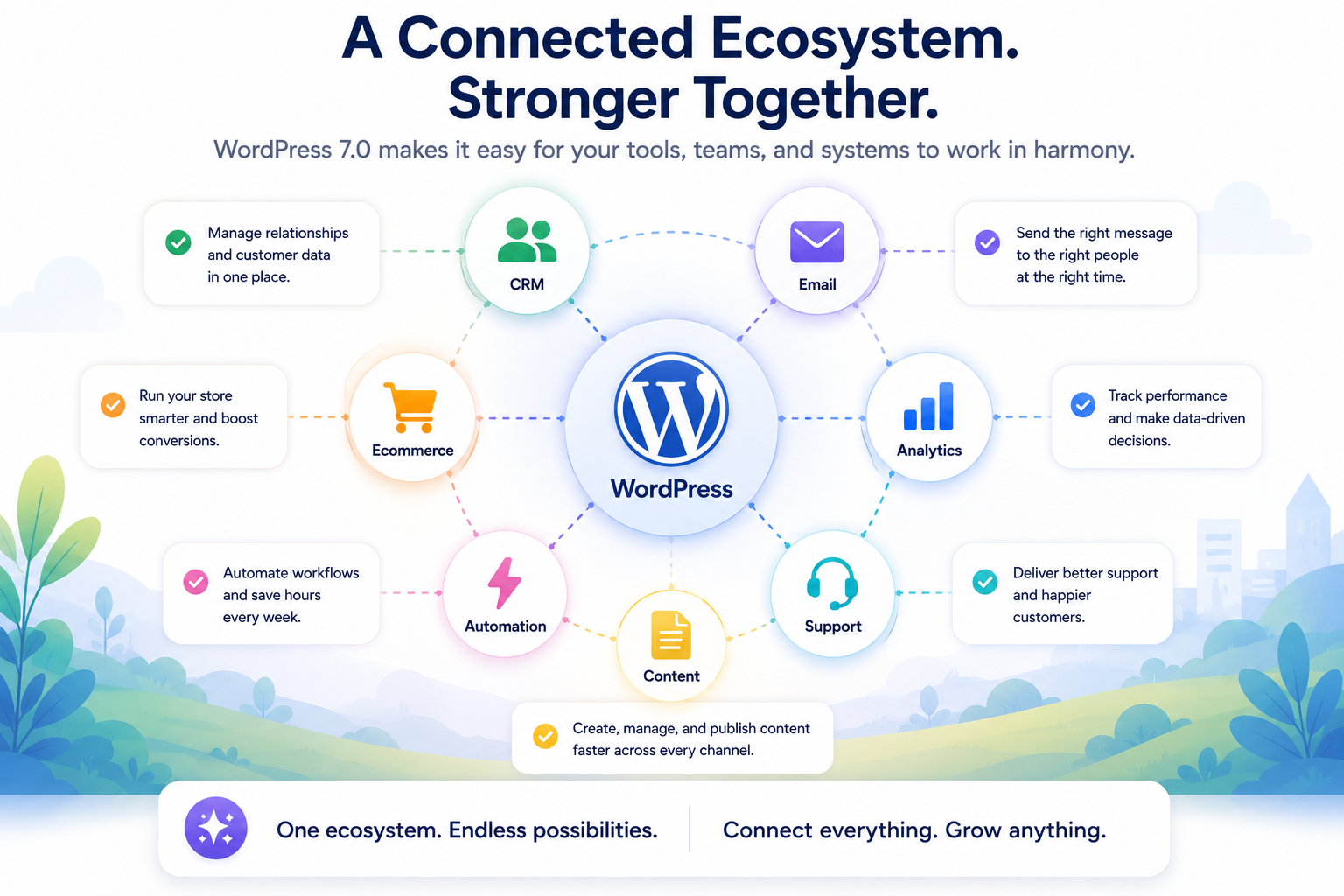
This direction is especially important because modern websites no longer operate independently. Businesses now rely on integrated ecosystems that connect:
CRMs
Email marketing platforms
Ecommerce systems
Automation tools
Analytics services
Customer support platforms
Publishing workflows
AI becomes significantly more powerful when all of these systems can communicate efficiently.
Real-World AI Use Cases Already Growing in WordPress
Although WordPress core is focusing heavily on infrastructure improvements, AI-powered experiences are already expanding rapidly across the broader WordPress ecosystem.
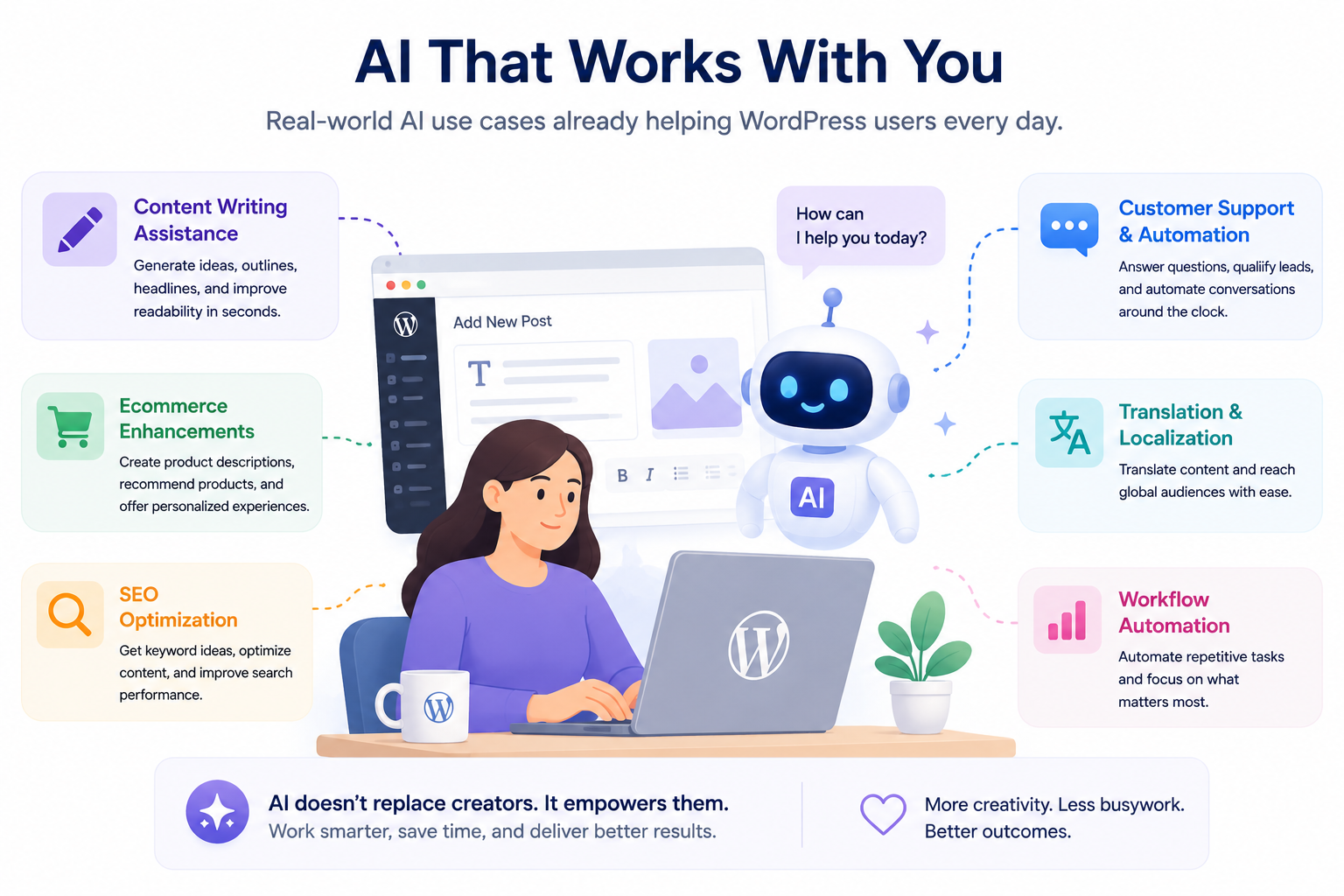
Today, AI tools are commonly used for:
Content Writing Assistance
AI-powered tools can help users:
Generate article outlines
Improve readability
Create headlines
Optimize SEO metadata
Rewrite content for clarity
Ecommerce Enhancements
Online stores increasingly use AI for:
Product descriptions
Smart recommendations
Customer engagement
Automated categorization
Personalized shopping experiences
SEO Optimization
Modern SEO tools now use AI to help with:
Keyword recommendations
Internal linking suggestions
Content scoring
Search intent analysis
Metadata generation
Customer Support and Automation
AI-powered chat systems and automation tools help businesses manage:
Customer conversations
Lead qualification
Support workflows
Automated responses
User engagement
Accessibility and Translation
AI systems are also improving:
Language translation
Accessibility recommendations
Alternative image text generation
Multilingual publishing workflows
These real-world use cases demonstrate how AI is already becoming deeply integrated into the WordPress ecosystem.
Popular AI Tools Expanding the WordPress Ecosystem
The growth of AI within WordPress is also being accelerated by plugin developers and commercial platforms introducing AI-powered capabilities into their products.
Popular examples across the ecosystem include:
Jetpack AI Assistant
Elementor AI
Divi AI
Rank Math Content AI
Yoast AI-powered optimization features
These tools help users streamline workflows, improve productivity and reduce repetitive publishing tasks.
As WordPress infrastructure continues evolving, future AI-powered plugins may become even more connected, scalable, and interoperable.
Understanding MCP Adapters and AI Communication
WordPress 7.0 also introduces discussions around MCP (Model Context Protocol) adapters and interoperability systems designed to improve communication between WordPress websites and external AI tools.
These systems help support:
Structured data exchange
Workflow coordination
Context-aware integrations
Smarter automation systems
Multi-platform communication
Although much of this infrastructure operates behind the scenes, it plays an important role in enabling more intelligent and scalable publishing experiences.
As websites become more dependent on AI-powered services and connected automation systems, reliable communication standards become increasingly important.
How Gutenberg Could Evolve With AI
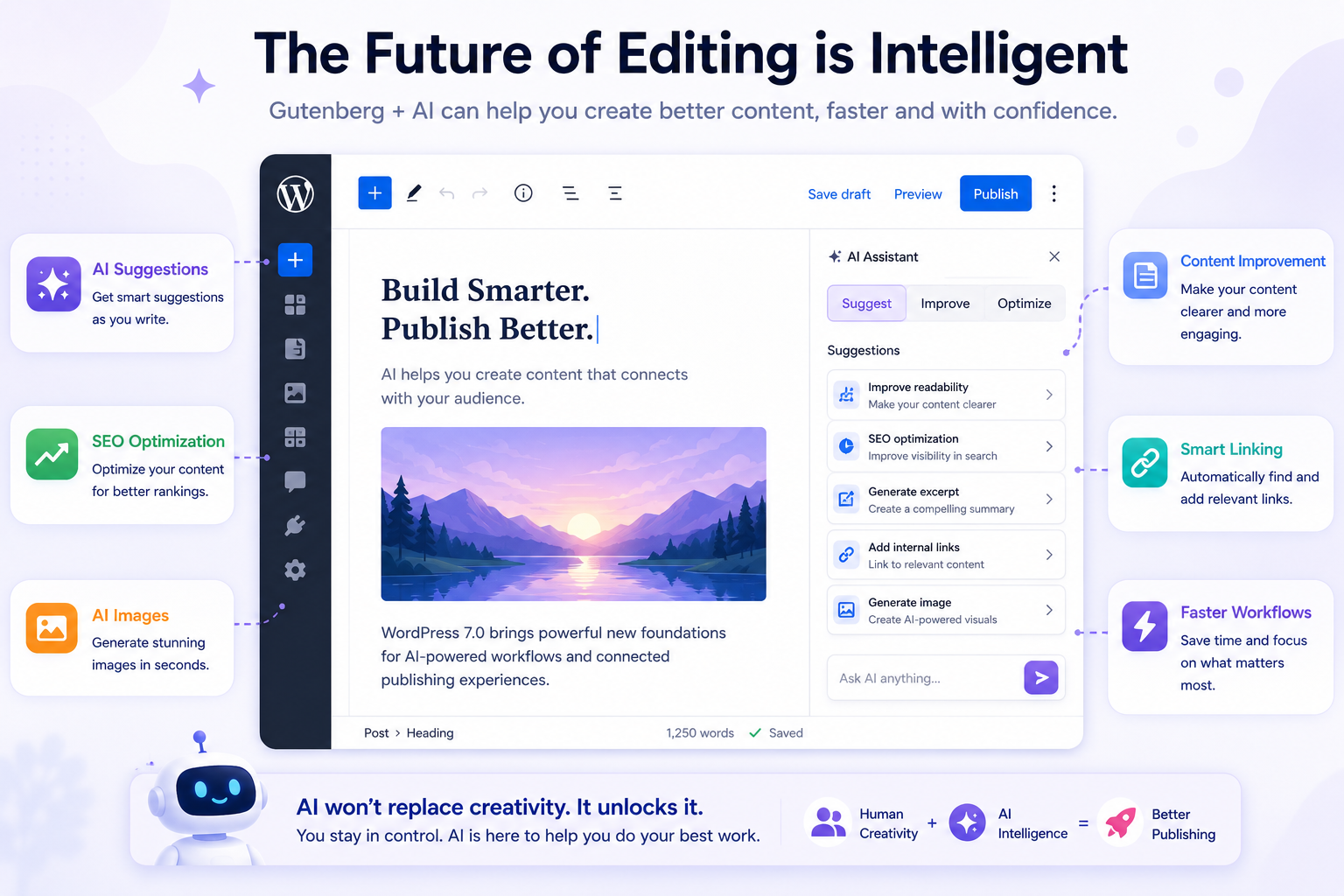
The Gutenberg block editor has already transformed how content is created inside WordPress. AI infrastructure improvements may eventually unlock even smarter editing experiences in the future.
Potential future possibilities could include:
Intelligent block recommendations
AI-assisted layout suggestions
Smarter content organization
Dynamic pattern generation
Context-aware editing assistance
Workflow-aware publishing tools
These possibilities highlight how AI may enhance the editing experience without removing creative control from users.
Instead of replacing creators, AI is more likely to function as an intelligent assistant that helps users work faster and more efficiently.
The Importance of Responsible AI Usage
As AI adoption increases, responsible implementation becomes increasingly important.
While AI can improve efficiency and productivity, businesses should also remain aware of challenges such as:
AI-generated inaccuracies
Low-quality automated content
Over-automation risks
Privacy concerns
Search engine quality guidelines
Human review requirements
Successful AI adoption depends on balancing automation with human creativity, editorial oversight, and strategic thinking.
The strongest publishing workflows will likely combine AI efficiency with human expertise rather than relying entirely on automation.
Practical Benefits for Developers and Businesses
The improvements introduced in WordPress 7.0 may become especially valuable for:
Agencies
Freelancers
Ecommerce brands
Publishers
SaaS companies
Content teams
Growing businesses
Modern teams often manage:
Content creation
SEO optimization
Design workflows
Publishing operations
Customer engagement
Analytics
Automation systems
By improving interoperability and workflow coordination, WordPress helps create a more efficient environment for scaling digital operations.
Smaller teams may especially benefit from systems that reduce repetitive operational work while improving publishing efficiency and workflow consistency.
A Foundation for the Future of Intelligent Publishing
WordPress 7.0 represents an important step toward AI-assisted web publishing.
The platform is evolving beyond traditional content management into a more connected ecosystem capable of supporting smarter workflows, scalable integrations, and intelligent automation systems.
As AI continues transforming the web, WordPress is building the infrastructure needed to support the next generation of publishing experiences.
Rather than focusing only on temporary AI hype, WordPress appears to be prioritizing long-term flexibility, ecosystem stability, extensibility, and interoperability.
That approach aligns closely with the platform’s open-source philosophy and its massive global ecosystem of developers, businesses, creators, and publishers.
Final Thoughts
WordPress 7.0 introduces a more modern and forward-looking approach to intelligent publishing infrastructure.
By improving interoperability, workflow communication, and ecosystem scalability, the platform creates a stronger foundation for AI-powered experiences across websites, ecommerce systems, publishing tools, and automation platforms.
The future of WordPress AI is not simply about generating websites faster. It is about creating a smarter, more connected publishing ecosystem where creators, businesses,developers, and intelligent systems can work together more effectively.
As the WordPress ecosystem continues evolving, AI will likely become an increasingly important part of how websites are built, managed, optimized, and scaled across the modern web.
Make your WordPress site even smarter with HighLevel. Learn more about GHL WordPress Hosting →


